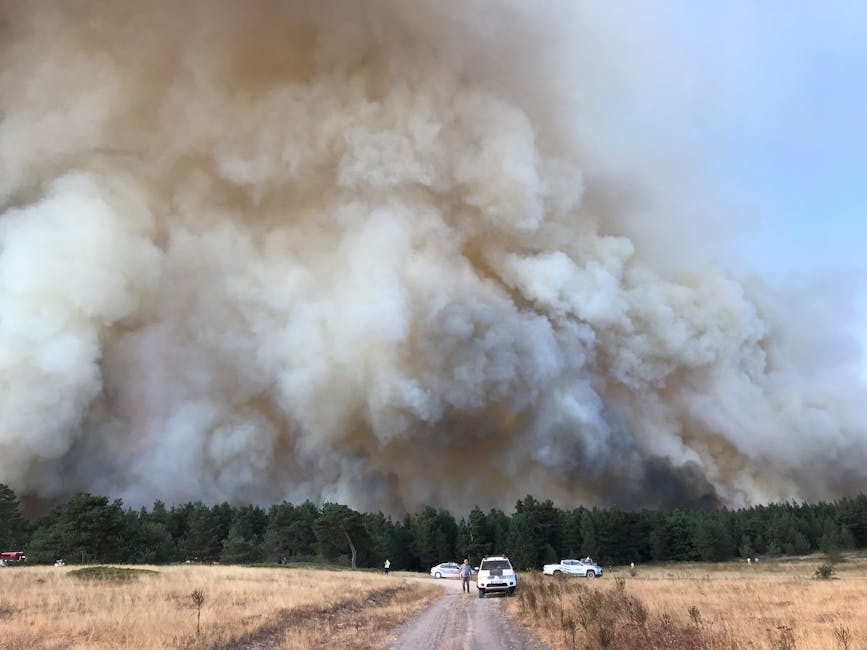
As global temperatures rise, the frequency and intensity of wildfires are increasing, posing significant risks to biodiversity worldwide.A recent study led by researchers from the University of Gothenburg indicates that nearly 84% of species vulnerable to wildfires will face heightened risks by the end of this century due to climate change.
Sources:
phys.orggu.seThe study, published in Nature Climate Change, reveals that higher average temperatures and changing weather patterns are drying out land and vegetation, making them more susceptible to wildfires.This shift enables wildfires to break out in regions closer to the poles, where they previously occurred less frequently.In some areas, fire seasons may even double in length under moderate climate scenarios, where emissions remain stable until the century's end.
Sources:
chalmers.segu.se"Our research shows that wildfires pose an ever-increasing threat to biodiversity," explains Xiaoye Yang, the study's lead author.The implications of these changing fire dynamics are particularly dire for species with limited habitats, concentrated mainly in South America, South Asia, and Australia.Many of these species are already endangered and could face extinction if wildfire frequency continues to rise.
Sources:
phys.orgchalmers.seThe researchers employed a combination of 13 climate models and machine learning techniques to predict changes in wildfire burned areas and fire season lengths.This innovative approach allows for a more comprehensive understanding of how climate-driven wildfires affect the long-term survival of various species.The study assessed data from the IUCN Red List, which includes 9,592 species currently threatened by the increasing occurrence and severity of wildfires.
Sources:
phys.orggu.seThe projected changes indicate that under a moderate warming scenario—approximately 2.7 degrees Celsius above pre-industrial levels—the global area affected by wildfires could increase by about 9.3%.Moreover, fire seasons could extend by approximately 22.8% over the same period.These changes highlight significant regional discrepancies, as certain areas, particularly in Africa, may experience reduced wildfire risk due to anticipated wetter conditions in the future.
Sources:
phys.orgchalmers.seThere is a crucial need for proactive climate action to mitigate these risks.The study emphasizes that measures to limit greenhouse gas emissions could significantly reduce the occurrence of wildfires.For instance, transitioning to a moderate emissions scenario could decrease the increase in species' vulnerability to wildfires by over 60%.Regions such as New Zealand, parts of South America, and areas near the Arctic stand to benefit the most from such reductions in emissions.
Sources:
phys.orgchalmers.seZiqian Zhong, another author of the study, highlights the importance of recognizing emerging threats posed by wildfires: "We cannot focus only on species or regions that are already recognized as fire-threatened today.We need to prepare for emerging risks—especially in high-latitude regions—and pay close attention to narrowly distributed species, as they seem to be especially vulnerable." This perspective is vital for developing effective conservation strategies that account for the increasing unpredictability of fire regimes due to climate change.
Sources:
chalmers.segu.seOverall, the findings of this study serve as a critical reminder of the interconnectedness of climate change, wildfire dynamics, and biodiversity.To safeguard the future of vulnerable species, comprehensive and adaptive management strategies must be implemented, addressing both the immediate threats of wildfires and the underlying factors driving climate change.The research underscores that current conservation efforts may underestimate future challenges if they do not consider disturbances such as wildfires in their planning and execution.