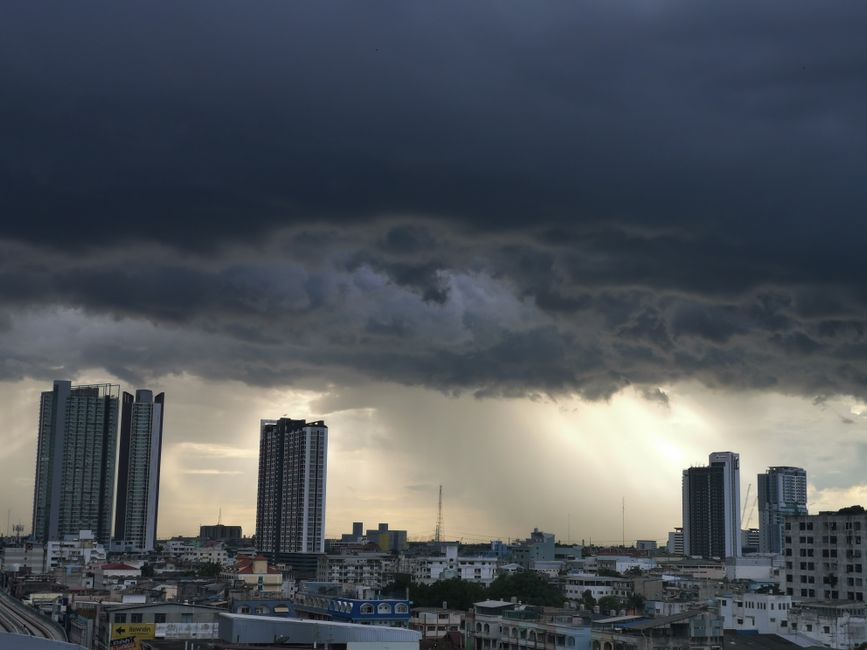
Climate change is not just an environmental issue; it is fundamentally redrawing the political map of the world.As rising temperatures and extreme weather events alter the landscape, nations are increasingly finding themselves at crossroads, where resource scarcity and migration pressures redefine relationships and power dynamics among countries.
Source:
eip.orgOne of the most immediate impacts of climate change is the intensification of resource conflicts, particularly over water and arable land.As agricultural productivity declines due to shifting weather patterns, nations are competing for diminishing resources.For example, in Eastern Europe, the ongoing conflict between Russia and Ukraine is partially driven by the latter's significant agricultural output, which Russia seeks to control.This situation illustrates how climate-driven food insecurity can exacerbate geopolitical tensions.
Source:
atmos.earthMoreover, climate change is prompting large-scale migration, as regions become uninhabitable due to extreme weather conditions or rising sea levels.The Internal Displacement Monitoring Centre reported that in 2022, over 32 million people were displaced by weather-related disasters globally.Many of these displaced populations are fleeing areas where agricultural viability has collapsed, such as Bangladesh and parts of the Sahel in Africa, leading to an influx of migrants into neighboring countries and urban centers.
Source:
environmentalconsortium.orgThe migration patterns indicate a shift not only in demographics but also in economic and political influence.Cities that receive climate migrants often face housing shortages and strained resources, which can lead to social tensions and further complicate urban planning efforts.For instance, US cities like Phoenix and Denver are witnessing an influx of residents from climate-affected areas, resulting in rising rents and increased demand for public services.
Source:
environmentalconsortium.orgIn regions with fragile ecosystems, the consequences of climate change can lead to heightened instability.Areas experiencing significant environmental degradation may become breeding grounds for conflict as communities compete for the remaining resources.This is evident in the Himalayas, where changing snowpack levels affect water supply for downstream populations, potentially leading to tensions between neighboring countries.
Source:
newsecuritybeat.orgAs nations confront these challenges, the need for effective conflict resolution mechanisms becomes increasingly critical.Climate change not only influences the outbreak of conflicts but also shapes the legacy of existing tensions.Peace mediators are now tasked with addressing how climate change can be integrated into conflict resolution strategies, ensuring that both environmental and societal issues are considered.
Source:
eip.orgThe political implications extend beyond conflict and migration.Climate change is a clear driver of shifts in global alliances as countries seek to collaborate on shared challenges.For instance, initiatives like the Belt and Road Initiative led by China illustrate how infrastructure investments are being reshaped by climate considerations, as nations look to build resilience against environmental threats.
Source:
nature.comDespite the urgent need for action, the legal frameworks governing climate-induced displacement remain inadequate.The 1951 Refugee Convention does not recognize environmental refugees, leaving many without formal protections as they cross borders in search of safety.
Source:
environmentalconsortium.orgThis gap in international law underscores the necessity for a global response that addresses the unique challenges posed by climate migration.Looking ahead, nations must develop adaptive strategies that not only mitigate the immediate effects of climate change but also anticipate the longer-term shifts in demographics and political power.This involves enhancing climate-resilient infrastructure, improving urban planning to accommodate incoming populations, and creating legal pathways for those displaced by environmental factors.
Source:
environmentalconsortium.orgIn conclusion, climate change is reshaping the world’s political landscape in profound ways.As nations navigate the complexities of resource scarcity, migration, and conflict, the interplay between environmental challenges and political relations will continue to evolve.Recognizing and addressing these dynamics will be crucial in fostering stability and cooperation in an increasingly interconnected and climate-affected world.